1 Two Familiar Methodologies
Solution selling, popularized through methodologies like SPIN Selling, is built on structured discovery: uncover the customer's specific pain point through the right questions, then position your product as the answer. It answers the question does this solve my problem?
Value selling goes further, translating that solution into a defensible financial outcome — dollars saved, hours reclaimed, revenue unlocked — for buyers who need a number before approving budget. It answers a different question: what is solving this worth, and how do we know?
Both are useful, well-established frameworks. But both were built for a world that no longer fully exists — one where a human expert, a rep or a value engineer, manually assembled the case by hand. Neither anticipated a world where an AI agent can generate a plausible “value” answer in seconds, with no one accountable for where the number came from.
2 The Real Fault Line: Governed vs. Ungoverned Value Claims
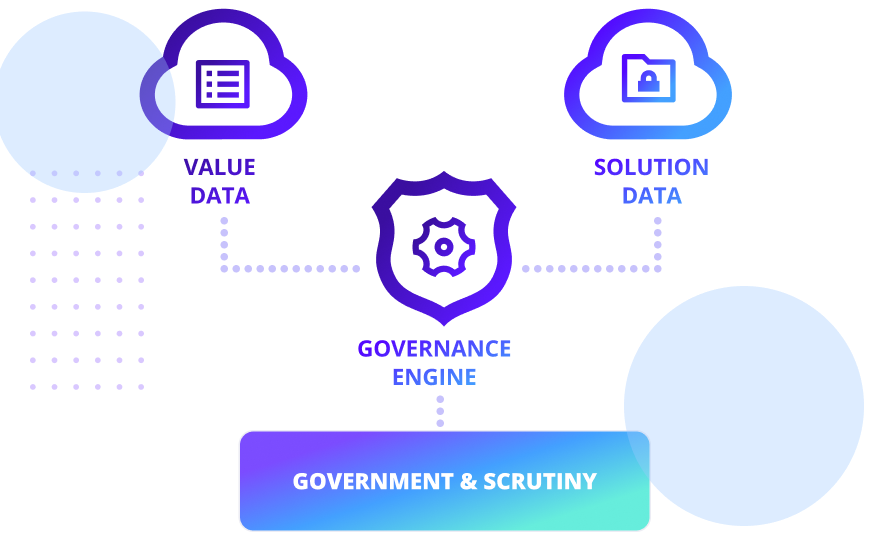
That shift is why the more important question in 2026 isn't “which methodology are we using.” It's: is our value claim governed, or is it ungoverned? A governed claim can be traced to an agreed framework, a named owner, and a measurable outcome. An ungoverned claim is just a plausible-sounding number — and plausible is no longer hard to produce.
The Problem Isn't the Methodology — It's Structural Randomness
Large language models are probabilistic: the same question can produce different answers depending on who asks, when, and how. This is true regardless of whether your organization calls its approach “solution selling” or “value selling” — the failure mode shows up differently in each, but it shows up in both.
In a solution-selling motion, it shows up as pain points that quietly shift definition: the rep's discovery notes describe a “reporting bottleneck,” the demo is scoped around a “data visibility gap,” and by the proposal stage the champion is defending a problem statement that's drifted from what was originally discussed — because each stage ran through a different AI-assisted summary with no shared source of truth. In a value-selling motion, it shows up as the number itself drifting — an efficiency gain quoted at three different percentages across three stages of the same deal. Different symptom, same root cause: nobody owns a single, stable version of the truth as the deal moves forward.
The Problem Isn't the Label — It's Artifact Thinking
Both solution selling and value selling can fall into the same trap: treating the output — a needs-fit narrative, an ROI slide — as the deliverable, rather than treating the underlying decision as something built together with the customer. Value doesn't live in the artifact. It lives in the decision the artifact is meant to support, and that decision requires agreement across six elements: the customer's real objectives, the specific challenges in their way, the value drivers that can change the current state, the metrics used to measure progress, the targets that justify the investment, and the timeline for achieving them. A one-way document — built by one side and handed to the other — rarely contains a validated version of all six, regardless of which methodology produced it.
The Problem Isn't Discovery vs. Quantification — It's Governance
Ask a value-selling team and a solution-selling team the same question — who owns this number, and who approved it? — and both often struggle for the same reason: decentralized, ungoverned tooling. A rep builds one prompt, a value consultant builds another calculator, and different teams quietly drift toward different assumptions for the same claim. When a CFO or procurement team asks where a number came from, the answer needs to be traceable — and neither methodology, by itself, guarantees that it is.
“The methodology decides how you have the conversation. Governance decides whether anyone believes the answer.”
3 Why This Matters More Now Than It Did
Five Years Ago
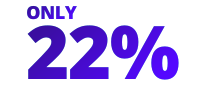
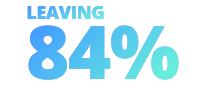
Oliver Wyman, in partnership with Raymond James, conducted an independent commercial market study — 25 in-depth interviews plus a survey of 228 go-to-market professionals — asked organizations how they currently communicate value to customers, and the results cut against both camps equally:
have a formalized, repeatable value framework
demonstrate high Customer Value Management maturity
remain in the early stages of institutionalizing customer value
Notice what that data doesn't say. It doesn't say 84% of companies have picked the wrong methodology. It says the overwhelming majority — regardless of whether they'd describe themselves as “value sellers” or “solution sellers” — don't have a governed, repeatable framework behind whatever number they're presenting. That's the real gap, and it's the same gap whether the label on the door says value selling or solution selling.This is exactly why an Outcome Ontology — a structured system organizing objectives, challenges, value drivers, metrics, targets, timelines, and evidence into one coherent framework — matters more now than either methodology alone. Without that structure, AI generates answers. With it, AI generates prescriptions: specific, defensible, traceable recommendations
4 From Methodology to Outcome Ownership
The organizations pulling ahead in 2026 aren't the ones that picked value selling over solution selling, or vice versa. They're the ones that stopped treating this as a methodology choice at all, and started building something bigger: a governed, co-created, continuously measured system for defining and tracking customer outcomes — one where every assumption is traceable, every stakeholder had a voice, and the outcome doesn't end when the contract is signed.
That's outcome ownership. It isn't a sales technique to adopt. It's the operating capability that makes any technique — solution selling, value selling, or whatever comes next — actually trustworthy.
FAQ
Frequently Asked Questions
Is value selling replacing solution selling?
Not exactly — and increasingly, that's the wrong question. Both are conversation techniques. The distinction that matters more in 2026 is whether the value claims produced by either approach are governed (traceable, owned, validated) or ungoverned (a plausible number with no accountability behind it).
Can a generic AI tool replace a value selling framework?
A generic AI tool can produce a number, but it can't on its own provide governance — a named owner for the assumptions, a traceable history of who validated what, or consistency across every team touching the same value driver. That gap, known as structural randomness, is why the same value driver can get quantified differently by different people at different points in a single deal.
What is an Outcome Ontology?
An Outcome Ontology is a structured system that organizes objectives, challenges, value drivers, metrics, targets, timelines, and evidence into one coherent framework. It gives AI-generated business cases the structure needed to produce defensible, traceable prescriptions rather than plausible-sounding but ungrounded answers.
Why do value numbers change across a deal's lifecycle, and how do you prevent it?
This typically happens because different teams — SDR, AE, sales engineer, customer success — each use separate, ungoverned tools to estimate the same value driver at different points in the deal, producing inconsistent numbers. Preventing it requires a single governed framework and a named owner for the value logic, used consistently by every team across the full customer lifecycle.
What does “outcome ownership” mean, and how is it different from a business case?
A business case is typically a one-time artifact produced for a single deal. Outcome ownership is an ongoing operating capability: a governed system where outcomes are co-created with the customer, every assumption is traceable, and the promised value is tracked and measured well after the deal closes — not just at the moment of signature.